

Sunday, April 12, 2026

April 8, 2009

Number 9

Number nine, number nine
Industry allows financial imbalance
-The Beatles, Revolution 9

The most important dimension or ‘tell‘ in trading is price itself. There is much to be gleaned from price and price alone. Where is the price? Where was the price? Is the trend up or is the trend down? Price and it’s history are an ever-evolving sketch of this picture.

The second dimension is the voting mechanism: volume. Volume is a very important glimpse into the persuasion of the masses. Without a good read on volume, you may be swimming against the tide–and many a bankroll have been ruined by speculators who throw discipline to the wind in their reckless and futile plunge against the tide.

With price and volume in my quiver, I can now add the third–and possibly the most important–tool in my arsenal: time. Time is a powerful and fundamental implement of the market.

When we look at history, we find rhyming in the timing of things. As I have stated before, and will continue to state, nothing changes in the markets–just the participants.

To weave together some important timing points, I must delve deeper into some specific points in history. Note as we recap some significant market events, that there is definitely a synchronicity in the timing. Reflect further still on the intrigue relevance of the
number 9.

From a religious and philosophical standpoint, 9 has tremendous significance. The number 9 is revered in Hinduism and considered a complete, perfected and divine number because it represents the end of a cycle in the decimal system.

Revolution 9

Revolution 9 was the longest track on the 1968 Beatles Album commonly known as the “White Album.” It played a very crucial role in the infamous “Paul is Dead” controversy. Playing the album backwards as a child, I noticed the oft repeated “number nine” is heard as “Turn me on, dead man.”

Black Friday, 1869

During the American Civil War, the United States government issued a large amount of money that was backed by nothing but credit. After the war ended, people commonly believed that the U.S. Government would buy back the “greenbacks” with gold. -Wikipedia

Sound familiar? THE GOVERNMENT ISSUED A LARGE AMOUNT OF MONEY THAT WAS BACKED BY NOTHING BUT CREDIT. There is certainly a familiar ring to those words in the headlines we read today.

The Crash of 1929

No need to elaborate on this one.

The Day the Music Died

The day the Music died, February 3rd, 1959. Rest in Peace Buddy Holly, Ritchie Valens, The Big Bopper and Roger Peterson.

The spirit of Buddy lives on. He is up there–right where he belongs–with the rest of the stars.

Top Three Buddy Holly (and the Crickets) songs:
1) Not Fade Away
2) Oh Boy!
3) Quando, Quando, Quando

Friday the 13th, 1989

Friday the 13th, 1989 is also known as the Friday the 13th mini crash. It was caused when the $6.75 billion leveraged buyout deal for UAL Corporation, the parent company of United Airlines, fell through.

Which word seems most familiar to todays markets? How about LEVERAGED.

Number 9, Number 9, History doesn’t repeat, but it often rhymes.

Which brings us here, to 2009. History can only be recalled in hindsight, but the number 9 sure has a ton of rhythm. And rhyme.

Peace

The Crash of 1869
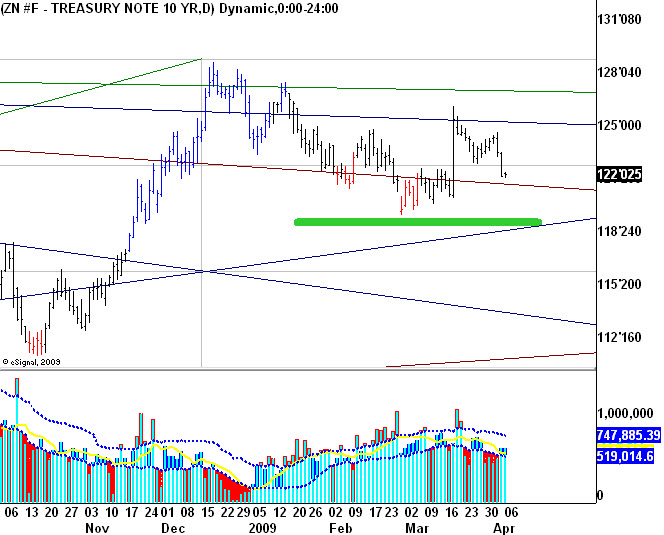
The Crash of 1869

April 7, 2009

Top Threee

1) Great article in the economist on the G20 Summit. The Obama effect.

“These days, America’s ties with China probably matter more to the world than the remnants of superpower diplomacy. And on that front, too, the chemistry was good. With China’s President Hu Jintao, Mr Obama agreed that his treasury secretary, Timothy Geitner, would start a Sino-American “strategic and economic dialogue” beginning in Washington, DC, this summer. The Americans said Mr Hu assured them of his commitment to boosting demand as well as improving economic management.”

Conclusion : China and the United States agree. The dollar will be moved higher.

2) For insight into a well facilitated, scripted intervention in the currency markets, I recommend former Treasury secretary Robert Rubin’s Memoir, In an Uncertain World: Tough Choices from Wall Street to Washington.
I have great respect for Rubin. I have heard him called the “greatest secretary of the Treasury since Alexander Hamilton.” I agree.

3) I am you. Was there too. One thing I’d always do. To breakthrough. Picture where I wanna go. Let it manifest. Try my best. Never rest.
-The White Collar Rapper

Peace


Comments (0) Categories: Forex

April 5, 2009

Trader Art

The first of this series was featured in my post from March 2nd.

In Today’s edition, #2 of the ^+* Bond series.

Trader Art 2/^+*

Trader Art 2/^+*

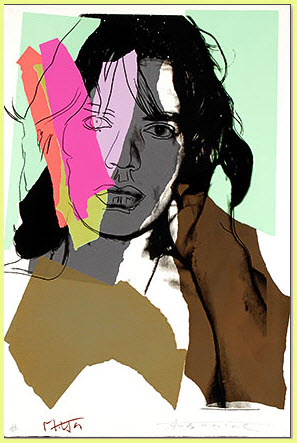
Rock Art

Art is trading and trading is art. Trades are fluid and I trade art.

Mick Jagger

Mick Jagger

Journalism

The markets move like the ocean, and I am but a drifting trader weaving in and out of the waves. Sometimes the sets come in with such poetic, rhythmic motion that the probabilities within almost chant like a lucid, soothing mantra. Other times, there is so little visibility and the tides are so variant that there is no predicting the next swell or crest. Some find it reassuring to believe that Mother Nature is predictable, but it truth, she is not. She simply beats to a rhythm.

The charge of the trader is to know that you won’t prevail in every attempt–you can’t catch every wave. You can be riding the most picture perfect trend, and it can fall apart without any warning at all, like a tunnel turned breaker. We can take solitude in the fact that a new wave will always takes it’s place. Opportunity always abounds in places where buyers meet sellers and vice versa.

As a journalist of finance, I must understand one thing for certain: there is no such thing as Objective Journalism. I am not pretending to be objective here in these pages. That would be a joke. I think Hunter Thompson summed up the theory of Objective Journalism when he covered the campaign trail in 1972.

“The only thing that I ever saw that came close to Objective Journalism was a closed-circuit TV setup that watched shoplifters in the General Store at Woody Creek, Colorado. I always admired that machine, but I noticed that nobody paid much attention to it until one of those known, heavy, out-front shoplifters came into the place…but when that happened everybody got so excited that the thief had to do something quick, like buy a green popsicle or a can of Coors and get out of the place immediately.

So much for Objective Journalism. Don’t bother to look for it here–not under any byline of mine; or anyone else I can think of. With the possible exception of things like box scores, race results, and stock market tabulations, there is no such thing as Objective Journalism. The phrase itself is a pompous contradiction in terms.”

I attempt to paint a picture of my particular vision of probabilities, and it is a perception that will not be replicated in mass prints. As the subject, I can’t possibly be objective. The mere fact that someone may read these pages will make this trader potentially observed. As Heisenberg states, “the observer changes the thing observed.”

By writing about things I contemplate, it is possible that I become observed. In becoming observed, I will change. The observer changes the thing observed. So why write? Why invite observation? Because it will make me better. Because it is time. Because it will challenge me more. My “read” on the markets will have more clarity. The more I benefit others, the more I am observed, and the better that will make me.

All along, I have the good fortune to chronicle for the world the thoughts of a speculator who thinks about winning not in terms of frequency of correctness, but by magnitude of rightness.

Peace

The Impersonator

The Impersonator

« Newer PostsOlder Posts »