

 Sunday, April 5, 2026



Cerberus Capital
In 2006 Cerberus Capital Management took a controlling 51 percent stake in lender GMAC from General Motors Corp for $7.4 billion.
In 2007, at the height of the credit bubble, Cerberus bought 80.1% of Chrysler from Daimler. Along with their co-investors, they ultimately invested $7.4 billion in Chrysler—a sum they now value at 1.4 billion, or 19 cents on the dollar.
In the interest of your informed scrutiny, the rundown on Cerberus execs: Former US Treasury Secretary John Snow is chairman; Steve Feinberg is president; and former Vice President Dan Quayle runs one of it’s international units.
In December of last year, Cerberus halted requests for redemptions in two of it’s funds — Cerberus Partners LP and Cerberus International LP — to avert having to sell the funds assets at “fire sale” prices. At the time, they intended to pay 20% of year-end withdrawals in cash and suspend the remaining redemptions for up to 12 months.
Since December, Cerberus has faced a slew of redemption requests from investors. Citing weak market conditions, they have not returned any cash. In an effort to restructure the funds, investors were asked if they’d move their holdings into a new fund that would have longer lock ups, but lower fees.
In response, clients representing a large portion of the funds — as much as 60% or 70% of total assets — have requested to withdraw.
Last week, traders in London and Frankfurt were abuzz with talk of a major hedge fund defaulting. Given recent reports of large redemption requests, speculation quickly turned to Cerberus. On September 1st, spokesman Tim Price stated,
“There is absolutely no truth to the speculation.”
On the same day, the Financial Times reported That COO of Cerberus, Mark Neporent, “stressed that those redemption requests totaled less than 20% of Cerberus’s $24.3bn in assets under management and would not constrain its ability to operate it’s private equity and hedge funds businesses.” Neporent is quoted as saying, “We still have lots and lots of money in our core business. We have ample liquidity to do what we want to do.”
All of this takes me back to the public markets. Warning signs indicate impending stress–especially in the financials. Any rally in equities last week remain unconfirmed by the credit market, where spreads have widened. When I hear the statement, “We have ample liquidity,” I am reminded of so many fallen financial giants whose similar words echoed in their demise.
I can’t help but wonder if Cerberus — or someone else for that matter — is indeed facing a liquidity crisis.
If someone is in danger of default, it is likely due to leverage. Are they over-leveraged? If so, who are the counter-parties to their risk?
Cerberus Capital is named after the Roman mythological three-headed dog that guarded the gates of the underworld–also known as Hades. Ironically, Cerberus Capital, or some other potentially over-leveraged entity, may be a monster of more epic proportions than anyone realizes.
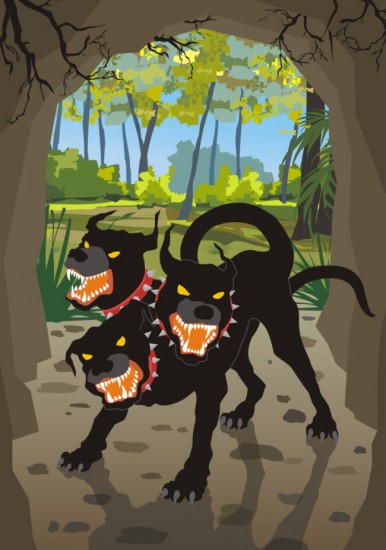
Cerberus